

Industry Industry

Welcome to our Accurate Sealing Solution Company!

Office Time: Mon - Sat 10:00 AM - 07:00 PM
(+91) 999 848 3674
Ahmedabad, Gujarat
info@accuratesealingsolution.com

O-Ring Backup Ring

Services

O-Ring Backup Ring

for Services!
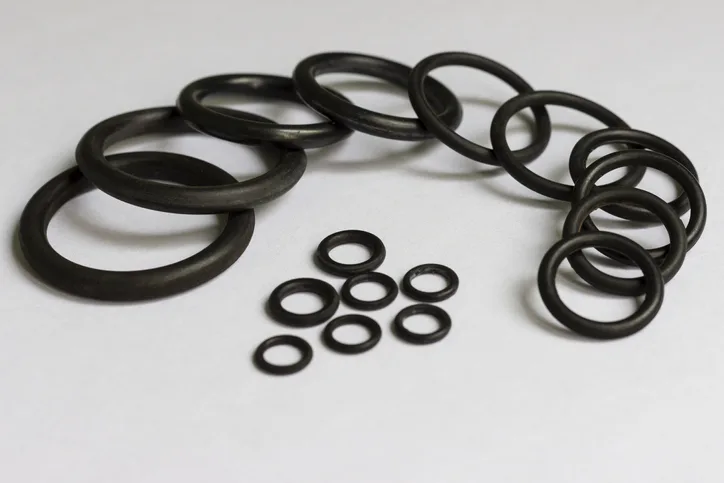
O - Ring O - Ring Cord O - Ring Kit Backup Ring Quad Ring

O-Ring

O Ring
Material Compatibility:
Chemical Resistance
O-rings must be resistant to the chemicals and fluids they will be exposed to. Materials like Viton, Nitrile (Buna-N), and EPDM are chosen based on the fluid compatibility.
Temperature Resistance
The material should withstand the temperature range of the application. Materials like Viton or Silicone handle high temperatures, while EPDM performs well in lower temperature ranges.
Elastomeric Properties
Compression Set Resistance
The ability of the O-ring to return to its original shape after being compressed. A lower compression set value means better long-term sealing performance.
Tensile Strength:
A measure of the material’s ability to resist breaking under tension. This is important for ensuring the O-ring doesn’t stretch or tear during use.
Hardness
Measured on the Shore A scale, hardness indicates how soft or hard the material is. Softer O-rings provide better sealing, while harder ones might be better suited for certain pressure conditions.
Pressure Resistance

The material’s ability to withstand internal and external pressures. O-rings are often used in high-pressure applications, so selecting a material that can resist deformation under pressure is critical.

Swelling or Shrinkage:
O-rings exposed to certain fluids can swell or shrink, which can affect their sealing performance. Materials like Nitrile are more prone to swelling when exposed to oils, while others like FKM (Viton) are more stable.
Durability and Wear Resistance
Abrasion Resistance
The material should be durable enough to withstand wear from friction or exposure to abrasive substances.
Ozone Resistance
Exposure to ozone can degrade some materials (like natural rubber), so choosing materials with good ozone resistance, such as EPDM, is essential.
Manufacturing and Surface Finish:
The O-ring should be manufactured with the proper dimensions and surface finish to ensure it fits precisely within the groove. The surface finish should prevent any damage to the material during installation and use.
Common Materials Used for O-Rings:
Nitrile (Buna-N)
Good for general sealing, especially with oils, fuels, and lubricants.
Viton (FKM)
Excellent for high temperatures and chemical resistance.
EPDM (Ethylene Propylene Diene Monomer)
Ideal for outdoor applications and water, steam, and ozone resistance.
Silicone
Suitable for high and low-temperature environments and food-grade applications.
Neoprene
Offers good resistance to oils and aging but is not as durable under high heat.
PTFE (Teflon)
Ideal for harsh chemical environments but lacks the elasticity of rubber O-rings.

O-Ring Cord

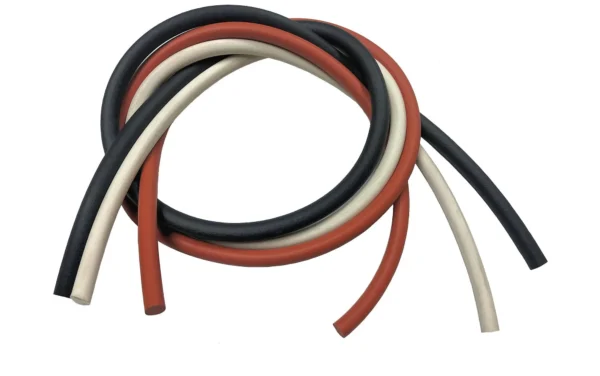
O-Ring-Cord
Cord Ring:
Elasticity & Flexibility
● Able to stretch and return to original shape.
● Enables tight sealing in static or dynamic applications.
Compression Set Resistance
● Maintains sealing force under prolonged compression.
Chemical Resistance
● Withstands exposure to oils, fuels, water, chemicals (depends on rubber type).
Thermal Stability
● Operates in a range of temperatures without degrading.
Durability
● Resistant to wear, abrasion, and aging.
Shore Hardness
● Available in different hardness levels (typically Shore A scale) to suit applications.
Material Properties of Common Rubber Cord Ring Materials :
Material Temp Range (°C) Chemical Resistance Key Features
Nitrile (NBR) -30 to +120 Good for oils/fuels Cost-effective, widely used
EPDM -50 to +150 Excellent for water/steam Good ozone/weather resistance
Viton (FKM) -20 to +200 Excellent chemical resistance High-temp and aggressive chemical resistance
Silicone -60 to +230 Moderate chemicals Very flexible, great for food/medical
Neoprene (CR) -40 to +120 Moderate Flame resistance, good weather resistance
Polyurethane -40 to +80 Good abrasion resistance High mechanical strength
Advantages of Using a Rubber Cord Ring:
Custom Sizes
Can be cut and joined to specific lengths, perfect for non-standard sizes.
Sealing Performance
Excellent for sealing under pressure, both static and dynamic.
Cost-Effective
Cheaper than molded custom seals, especially for large diameters.
Ease of Installation
Simple to fit, with no need for special tools.
Versatility
Suitable for a wide range of industries: automotive, plumbing, industrial, food-grade, etc.
Noise and Vibration Damping
Rubber cord rings can reduce mechanical vibrations and noise.

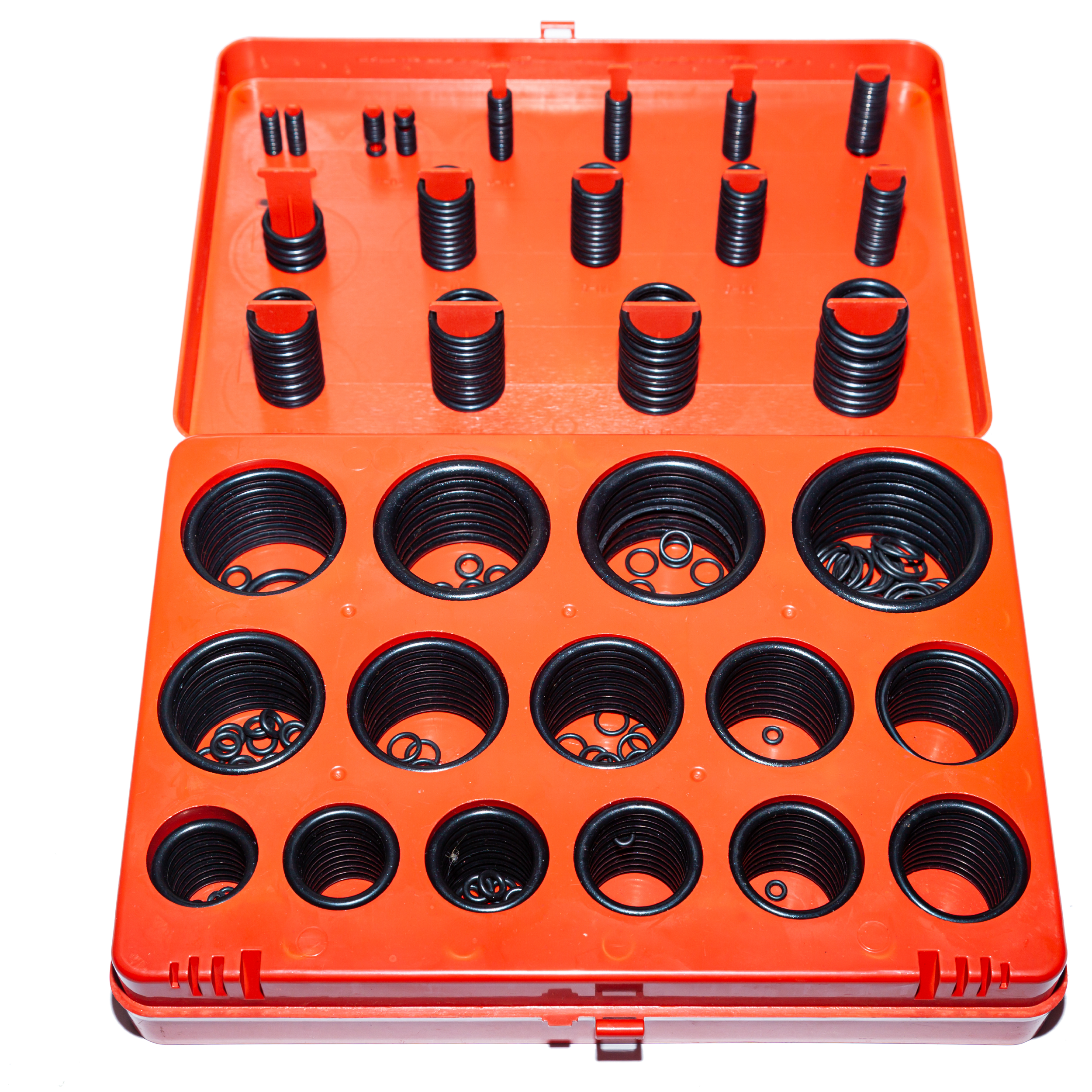
O-Ring Kit

Features :

backup-ring

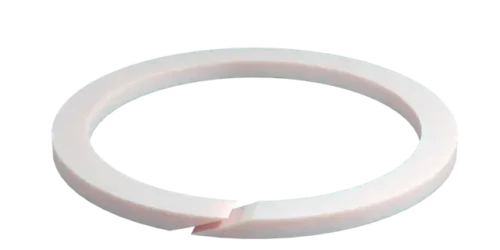
Backup Ring

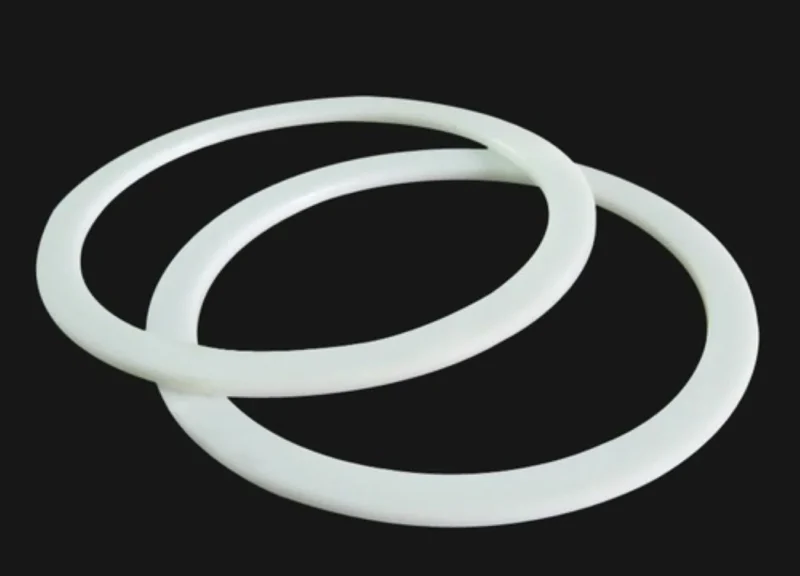
A Backup Ring is a type of sealing component often used in conjunction with O-rings, Quad Rings, or other elastomeric seals to prevent extrusion in high-pressure or dynamic applications. The primary function of a Backup Ring is to reinforce the sealing system and provide support to the elastomeric seal, ensuring that it maintains its shape and does not get squeezed out of its groove under extreme conditions.
Key Properties of Backup Rings:
Extrusion Resistance

Backup Rings are primarily used to prevent extrusion of elastomeric seals (such as O-rings or Quad Rings) under high-pressure conditions. They act as a barrier to keep the seal from being forced out of its groove when exposed to internal pressure.

Compression Strength

The Backup Ring helps to absorb the pressure load and distribute it more evenly across the surface of the elastomeric seal, ensuring that the seal remains intact and does not deform excessively.

Material Hardness

Backup Rings are generally made from harder materials than the elastomeric seal they support, such as PTFE (Teflon), Nylon, or Polyurethane. The increased hardness helps resist deformation, making them suitable for high-pressure and high-load applications.

Low Friction

Backup Rings are typically made from materials that have low friction coefficients, allowing them to move smoothly within their grooves without causing excessive wear or damage to the surrounding components.

Groove Design

Backup Rings come in various designs, such as split rings, solid rings, or spiral-wound rings, depending on the type of sealing application and the system’s pressure requirements. The groove design is critical in ensuring the Backup Ring’s effectiveness.

Temperature Stability

While the elastomeric seal may have limitations in terms of temperature, the Backup Ring should offer thermal stability to withstand extreme temperature changes, ensuring that it functions consistently over a wide temperature range.

Size and Fit

Backup Rings must be precisely matched to the size of the O-ring or other elastomeric seal to function properly. If the Backup Ring is too small or large, it won’t provide the desired extrusion protection, leading to failure.

Materials Used for Backup Rings:
The material selection for Backup Rings is critical to their performance. Backup Rings are made from various engineering plastics and thermoplastic materials that have high strength, wear resistance, and the ability to handle high pressures.
1. PTFE (Polytetrafluoroethylene):
Excellent Chemical Resistance:

PTFE is widely known for its superb chemical resistance to a wide range of fluids and gases, making it ideal for use in harsh chemical environments.

Low Friction

PTFE offers low friction, which minimizes wear during movement and improves the longevity of the seal system.

Thermal Stability

PTFE can operate in a wide temperature range (from -200°C to 260°C), making it suitable for both high and low-temperature applications.

Applications

Common in applications involving high temperatures, aggressive chemicals, and demanding sealing environments (e.g., chemical processing, pharmaceuticals).
2. Nylon (Polyamide):
High Strength and Toughness
Nylon is often used for Backup Rings in applications requiring high strength and toughness under mechanical load.
Moderate Chemical Resistance
Nylon is resistant to many oils, solvents, and fuels, but not ideal for exposure to strong acids or bases.
Wear Resistance
Nylon offers good wear resistance, making it useful for dynamic applications.
Applications
Common in hydraulic and pneumatic systems, particularly where moderate chemical exposure is present.
3. Polyurethane (PU):
Abrasion Resistance
Polyurethane is known for its excellent abrasion resistance, making it an ideal choice for applications subject to wear and tear.
Elasticity and Strength
Polyurethane offers both elasticity and strength, helping to maintain its integrity under pressure.
Good Chemical Resistance
It provides resistance to oils, fuels, and many chemicals, but it may degrade under exposure to certain weather conditions or ozone.
Applications
Used in high-pressure hydraulic and pneumatic applications, particularly where high wear resistance is needed.
4. Viton (FKM or Fluoroelastomer):
Excellent High-Temperature and Chemical Resistance
Viton is highly resistant to heat, chemicals, and aggressive fluids. It’s often used in systems that handle high temperatures (up to 200°C – 250°C).
Hardness and Durability
Viton has high hardness, making it suitable for Backup Rings that need to maintain their shape under high-pressure conditions.
Applications
Common in automotive, aerospace, and chemical industries, especially for sealing aggressive chemicals at high temperatures.
5. Acetal (Polyoxymethylene, POM):
High Mechanical Strength
Acetal is strong and has low moisture absorption, making it suitable for precise, tight-fitting Backup Rings.
Good Chemical Resistance
Acetal offers good resistance to oils and fuels, and it has low friction.
Applications
Frequently used in fluid power systems, including hydraulic and pneumatic applications.
6. Polycarbonate:
Impact Resistance
Polycarbonate is tough and impact-resistant, making it suitable for Backup Rings exposed to high-pressure environments where mechanical shock or impact could occur.
Thermal Stability
Polycarbonate is stable at moderately high temperatures but is not as heat-resistant as PTFE or Viton.
Applications
Used in applications where impact resistance is a critical requirement, but temperatures are not excessively high.
7. Glass-Filled Materials:
Reinforced Strength
Materials like glass-filled PTFE or glass-filled Nylon offer enhanced strength and stiffness, providing additional mechanical properties for extreme conditions.
Better Pressure Resistance
These materials are often used in Backup Rings that need to withstand very high pressures while maintaining their integrity.
Applications
Used in demanding applications such as high-pressure hydraulics or aerospace seals.
Applications of Backup Rings
Backup Rings are used in a wide range of industries and applications, including:
Hydraulic and Pneumatic Systems
In high-pressure fluid systems where O-rings and other seals are at risk of extrusion due to pressure.
Automotive
In braking systems, fuel systems, and powertrain components to protect elastomeric seals.
Aerospace
In sealing systems for engines, hydraulic systems, and landing gear components.
Oil & Gas
Used in offshore and drilling applications where pressure and chemical exposure are extreme.
Chemical Processing
To protect seals in aggressive chemical environments where high pressures are involved.
Conclusion
Backup Rings play a vital role in preventing the extrusion of seals and improving the longevity and performance of sealing systems in high-pressure and dynamic environments. The material choice for Backup Rings depends on factors such as pressure, temperature, chemical compatibility, and wear resistance. Common materials like PTFE, Nylon, Polyurethane, Viton, and Acetal are selected based on the specific needs of the application, ensuring optimal performance and durability.
Quad Ring-01

Quad Ring

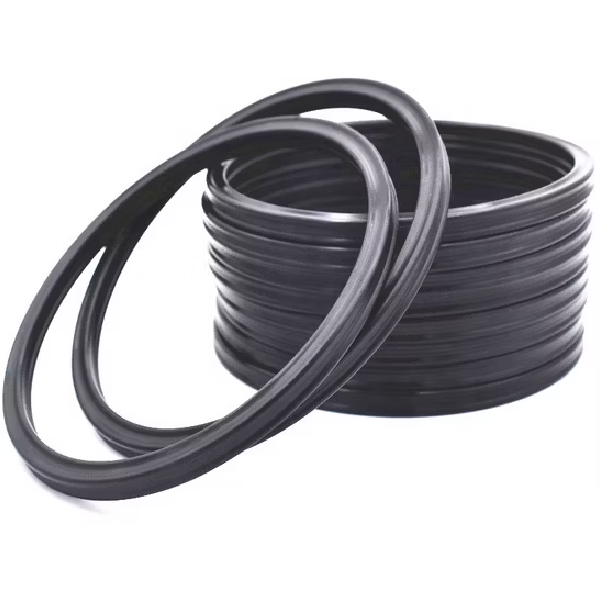
Quad Rings, also known as X-rings, are a type of sealing ring designed for use in static or dynamic sealing applications. They have an “X” cross-section rather than the circular cross-section of a traditional O-ring. This unique shape allows them to offer improved sealing capabilities in certain applications. Here’s an overview of the properties of Quad Rings and the materials used.
Key Properties of Quad Rings:
Shape and Design
● The quad-ring has a distinctive “X” shape, which provides four sealing surfaces instead of the two that are typical for an O-ring. This can lead to more effective sealing in certain conditions, as it reduces the chances of leakage.
● This shape also helps the Quad Ring to have better load distribution, reducing wear and increasing the longevity of the seal.
Improved Sealing Performance
● The four sealing surfaces provide better contact with the mating surfaces, especially in dynamic applications like pistons and hydraulic seals.
●The cross-section design also improves resistance to extrusion under pressure, which is helpful in high-pressure environments.
Reduced Friction
● The Quad Ring design can reduce friction in dynamic applications, which leads to lower wear rates and improved efficiency compared to traditional O-rings.
● The symmetrical geometry allows the Quad Ring to stay aligned better during movement, further reducing friction.
Improved Durability
● Due to the design, Quad Rings tend to outlast traditional O-rings in applications involving frequent movement or high pressure. The four sealing points can distribute pressure more evenly, which helps avoid excessive wear on any single part of the ring.
Minimal Swelling
● The unique design and material properties help minimize the swelling that can occur in traditional O-rings when exposed to chemicals, oils, or other harsh fluids.
Material Properties for Quad Rings:
Similar to O-rings, Quad Rings are made from a variety of elastomeric materials, with the choice depending on the application’s needs, including temperature, pressure, chemical compatibility, and wear resistance.
Nitrile (Buna-N):
● Best for general sealing with oils, fuels, and lubricants.
● Provides good abrasion and wear resistance, but not suitable for high-temperature or high-chemical environments.
● Often used in automotive and industrial applications.
Viton (FKM)
● Provides excellent resistance to high temperatures, chemicals, oils, and fuels.
● Suitable for harsh environments (chemical processing, high temperatures, automotive, aerospace).
● Works well in dynamic sealing applications where high thermal stability is needed.
EPDM (Ethylene Propylene Diene Monomer)
● Excellent resistance to heat, ozone, and weathering.
● Ideal for water, steam, and outdoor applications, but not compatible with oils or hydrocarbons.
● Common in plumbing, HVAC, and automotive applications.
Silicone
● Great for high and low-temperature extremes, making it suitable for applications with temperature fluctuations.
● Good for food-grade and medical applications but has poor wear resistance compared to other materials like Viton or Nitrile.
● Common in sealing electrical components and medical devices.
Neoprene (Chloroprene)
● Good for oil resistance, as well as resistance to aging, ozone, and weathering.
● Performs well in environments exposed to moderate temperature variations and light chemical exposure.
● Common in refrigeration and automotive applications.
Polyurethane
● Excellent abrasion and wear resistance, making it highly durable
● Often used in high-pressure and dynamic sealing applications.
● Good choice for hydraulic seals, but may not have the same high-temperature resistance as materials like Viton.
PTFE (Teflon)
● Offers outstanding chemical resistance and is ideal for use in extreme chemical environments.
● Not as elastic as other materials, which limits its use in dynamic sealing applications. However, it can be used in static or low-movement applications where chemical resistance is critical.
● Often used in highly demanding industries like pharmaceuticals and chemical processing.
FKM/FPM (Fluorocarbon)
● Fluorocarbon-based materials are known for their excellent chemical resistance and high-temperature tolerance.
●Commonly used in aerospace, automotive, and chemical processing industries due to their resistance to aggressive chemicals and high heat.
● Offers good resistance to acids, oils, fuels, and solvents.
Advantages of Using Quad Rings:
Better Sealing Efficiency
With four sealing surfaces, Quad Rings can be more efficient than O-rings, especially in applications where the seal needs to function in dynamic conditions.
Longer Lifespan
The improved distribution of pressure reduces wear, resulting in a longer operational life.
Reduced Leakage
The design can help reduce the risk of leakage, especially in systems subject to movement, pressure, or vibrations.
Lower Friction
In dynamic sealing, the Quad Ring can reduce friction, helping to improve performance and reduce energy loss.
Applications:
Hydraulic Seals
Used in high-pressure fluid systems where both static and dynamic sealing is required.
Rotary Seals
Common in rotating equipment, such as pumps and motors, where sealing against fluids is necessary.
Piston Seals
In pneumatic and hydraulic systems for better pressure retention.
Automotive and Aerospace
Often used in applications with high-performance requirements, including fuel and oil seals.

Archives

No archives to show.

Categories

  • No categories