



Services
Rotary Seals
for Services!
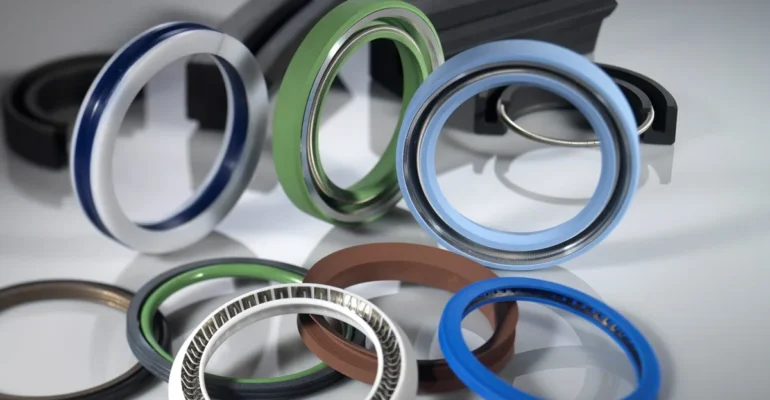
Oil Seal
Teflon Seal
Fabric Seal
Endcaps Seal
V-Ring
Cassette Seals
Face Seals
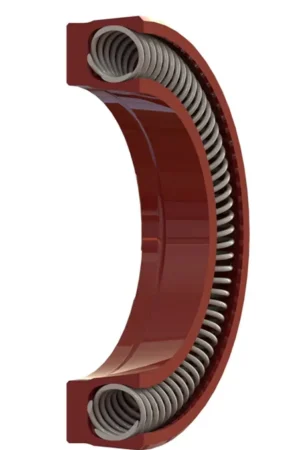
Standard Radial Lip Seals (Oil Seals)
A radial lip seal (commonly called an oil seal) is a flexible sealing element designed to prevent lubricant leakage along a rotating shaft and to keep out contaminants such as dirt, dust, and moisture.
Key Properties
:
| Property | Typical Value / Description |
| Material (Lip) | NBR (Nitrile rubber), FKM (Viton), HNBR, Silicone, PTFE |
| Material (Case) | Carbon steel, stainless steel, or elastomer-bonded |
| Spring | Garter spring (stainless steel / carbon steel) for constant radial load |
| Temperature Range | –40°C to +120°C (NBR), up to +200°C (FKM/Viton), +250°C (PTFE) |
| Speed Capability | Up to ~30 m/s (elastomer lip), up to ~50 m/s (PTFE) |
| Pressure Capacity | Typically up to 0.5 bar (standard design); reinforced types up to ~10 bar |
| Friction / Wear | Low–moderate; depends on lubrication and shaft finish |
| Shaft Surface Finish | Ra 0.2–0.8 µm, hardness > 55 HRC recommended |
| Chemical Resistance | Depends on elastomer: NBR (oils/fuels), FKM (chemicals, high temp.), PTFE (universal chemical resistance) |
Advantages of Radial Lip (Oil) Seals
Cost-Effective
inexpensive compared to mechanical seals.
Compact & Simple Design
easy to integrate in housings.
Wide Availability
standardized sizes (ISO / DIN) are widely stocked.
Versatile Materials
choice of elastomers for oil, fuel, chemical, or high-temp service.
Good Lubrication Retention
ensures long bearing and gearbox life.
Low Friction
minimal power loss compared to mechanical seals.
Easy to Install & Replace
press-fit into bore, no complex tools required.
Disadvantages of Radial Lip (Oil) Seals
Limited Pressure Capability
not suitable for high-pressure sealing (>0.5 bar standard).
Wear Over Time
sealing lip degrades with shaft rotation, especially at high speeds.
Sensitive to Shaft Condition
poor surface finish, hardness, or eccentricity causes leakage.
Temperature & Chemical Limitations
elastomers (NBR, HNBR, FKM) must be selected carefully for fluids.
Friction Heat Build-Up
high speeds without lubrication may overheat lip.
Not Suitable for Severe Contaminants Alone
may need dust lip or secondary seals.
Applications of Radial Lip Seals
:
| Industry | Application Examples |
| Automotive | Crankshafts, camshafts, wheel hubs, gearboxes, axles |
| Industrial Gearboxes | Input/output shafts, couplings, reducers |
| Hydraulics | Low-pressure pumps, shafts with oil splash lubrication |
| Agricultural Machinery | Power take-off shafts, wheel hubs, transmission shafts |
| Electric Motors | Shaft seals to retain grease/oil in bearings |
| Marine | Propeller shafts (with additional protection) |
| General Machinery | Fans, blowers, conveyors, compressors |
Material Selection for Radial Lip Seals
:
| Material | Temp. Range (°C) | Best Suited For |
| NBR (Nitrile) | –40 to +120 | General purpose oils, fuels, grease |
| FKM (Viton) | –30 to +200 | High temp., fuels, chemicals, automotive |
| HNBR | –30 to +150 | Better wear resistance, automotive & industrial |
| Silicone | –60 to +200 | Low-temp flexibility, food/pharma |
| PTFE | –60 to +250 | High speed, dry-running, chemicals |
When to Use Standard Radial Lip Seals (Oil Seals)
General-purpose oil and grease sealing.
Medium-speed shafts with splash lubrication.
Applications where cost efficiency and compact design are critical.
Bearings, gearboxes, and automotive engine components.
Avoid them for
High-pressure sealing (>10 bar → mechanical seals or special designs needed).
Highly contaminated environments (use cassette seals or mechanical face seals).
Extreme misalignment or eccentricity (use floating or PTFE seals).
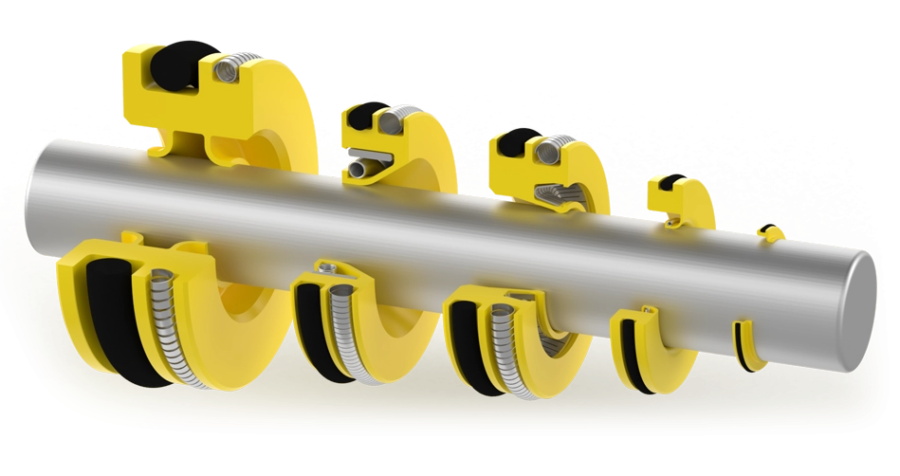
PTFE Rotary Shaft Seals
A PTFE rotary shaft seal is a high-performance radial seal designed for demanding applications where standard elastomer lip seals cannot provide sufficient resistance to temperature, speed, pressure, or aggressive chemicals. Instead of rubber, the sealing lip is made from polytetrafluoroethylene (PTFE), which offers excellent dry-running capability and universal chemical resistance.
Key Properties of PTFE Rotary Shaft Seals
:
| Property | Typical Value / Description |
| Material (Lip) | PTFE (filled or unfilled: glass, carbon, bronze, MoS₂ fillers possible) |
| Material (Case) | Stainless steel, carbon steel, or composite |
| Spring | Stainless steel garter spring (constant radial load) or springless designs |
| Temperature Range | –60 °C to +250 °C |
| Speed Capability | Up to ~50 m/s (depends on lubrication & load) |
| Pressure Capacity | Standard: up to 10 bar; special reinforced designs: >20 bar |
| Friction / Wear | Very low, especially suitable for dry-running conditions |
| Shaft Surface Finish | Ra 0.1–0.4 µm recommended; hardness > 60 HRC |
| Chemical Resistance | Nearly universal – resistant to oils, fuels, solvents, acids, alkalis |
Advantages of PTFE Rotary Shaft Seals
Wide Temperature Range (–60 °C to +250 °C)
High Chemical Resistance (almost universal)
Dry-Running Capable → suitable where lubrication is poor or absent
Low Friction & Power Loss → good for high-speed shafts
Excellent Wear Resistance (especially with filled PTFE grades)
Higher Pressure Tolerance than standard elastomer seals
Applications of PTFE Rotary Shaft Seals :
| Industry | Application Examples |
| Automotive / Motorsports | Turbochargers, fuel injection pumps, transmissions |
| Chemical & Process | Pumps, mixers, agitators, reactors |
| Pharma / Food | Equipment requiring FDA-approved, non-contaminating seals |
| Aerospace | Hydraulic systems, turbine engines |
| Marine | Propulsion shafts, pumps exposed to aggressive seawater |
| Industrial Machinery | Compressors, centrifuges, high-speed motors |
PTFE Material Variants
:
| PTFE Type | Features / Best Suited For |
| Virgin PTFE | Pure, low friction, FDA-compliant, but softer (lower wear resistance) |
| Glass-Filled PTFE | Higher wear resistance, lower deformation |
| Carbon-Filled PTFE | Improved thermal conductivity & wear resistance |
| Bronze-Filled PTFE | High strength, good for dynamic sealing under load |
| MoS₂-Filled PTFE | Low friction, enhanced load-carrying capability |
When to Use PTFE Seals:
High speed (>20 m/s) or dry-running shafts
Aggressive chemicals or solvents present
High-temperature service (>200 °C)
Applications where elastomers fail prematurely
Avoid PTFE Seals if:
Cost-sensitive, general-purpose sealing is sufficient
Shaft has poor finish / hardness → PTFE lip will wear quickly
Large misalignment or shaft eccentricity is expected
Limitations of PTFE Rotary Shaft Seals
Higher Cost vs. NBR/FKM oil seals
More Complex Installation → lip is delicate, needs careful handling
Shaft Condition Critical → very smooth & hard surface required
Less Elastic Recovery → not as forgiving to shaft misalignment
Brittle Material → not as robust against impact or rough handling
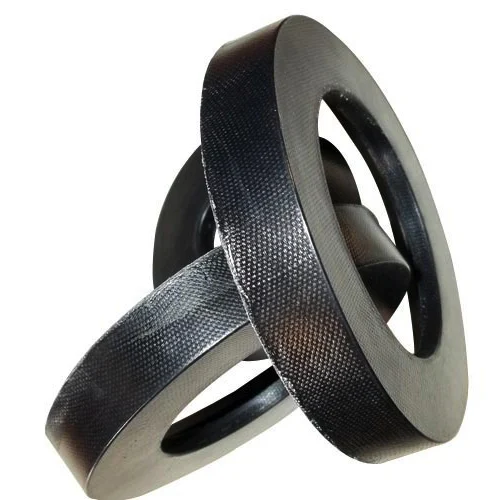
Rotary Fabric Seal
Features :
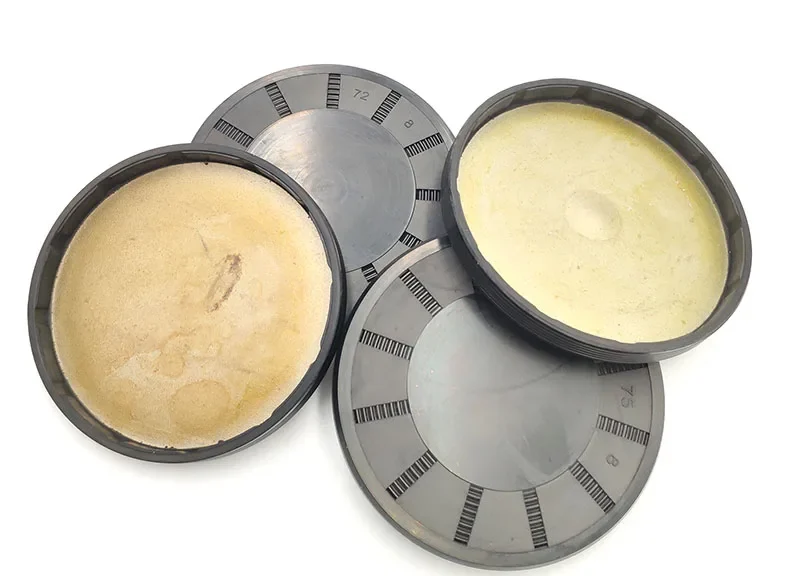
Rotary Endcaps Cassette Seals
A cassette seal is an advanced sealing system that integrates multiple sealing lips, protective labyrinths, and sometimes bearings into a single cassette-style unit. Designed for heavy-duty and contaminated environments, cassette seals provide long service life by offering multi-stage protection against dirt, mud, water, and other abrasive particles while retaining lubricant.
Key Properties of Cassette Seals
:
| Property | Typical Value / Description |
| Construction | Multi-lip radial seal integrated with a protective metal/rubber housing |
| Sealing Lips | Primary lip (oil retention), dust lip(s), and additional barrier lips |
| Materials (Lips) | NBR (standard), FKM (high temp.), PTFE (special versions) |
| Materials (Housing / Case) | Steel or stainless steel, often rubber-coated |
| Spring | Stainless or carbon steel garter spring on primary lip |
| Temperature Range | –40 °C to +120 °C (NBR), up to +200 °C (FKM) |
| Speed Capabilitye | Typically up to ~20 m/s (depends on size & design) |
| Pressure Capacity | Generally up to 0.5 bar (not designed for pressure sealing) |
| Friction / Wear | Higher than single lip seals, but compensated by durability |
| Contaminant Resistance | Excellent – labyrinth and dust lips keep out dirt & moisture |
Advantages of Cassette Seals
Excellent Protection Against Contamination → multi-lip & labyrinth system
Extended Service Life → longer than standard oil seals in dirty environments
Integrated Design → simplifies installation, no need for multiple seals
Durability → robust against mud, water, and abrasive particles
Good Lubricant Retention → protects bearings and gear systems
Reduced Maintenance Costs in agricultural and off-road equipment
Applications of Cassette Seals
:
| Industry | Application Examples |
| Agriculture | Tractor axles, wheel hubs, PTO shafts |
| Construction & Mining | Wheel ends, track rollers, gearboxes |
| Off-Highway Vehicles | Final drives, differentials |
| Marine & Heavy Industry | Exposed shafts subject to water and grit |
| Industrial Machinery | Harsh environments with dust, slurry, or abrasive media |
Material Selection for Cassette Seals
:
| Lip Material | Temp. Range (°C) | Best Suited For |
| NBR (Nitrile) | –40 to +120 | General purpose, oils & greases |
| FKM (Viton) | –30 to +200 | High temp., aggressive chemicals |
| PTFE | –60 to +250 | Extreme chemical resistance, dry running |
When to Use Cassette Seals:
Heavy-duty applications with mud, dust, water, or slurry
Agricultural & construction equipment where long service life is critical
When a “fit-and-forget” solution is needed with minimal maintenance
Avoid PTFE Seals if:
Space is limited → cassette design requires more axial space
Application requires high-speed (>20 m/s) or high-pressure sealing
Cost-sensitive, clean environment → a standard radial lip seal may suffice

Rotary V-Ring
A V-Ring is an all-rubber, one-piece axial seal that mounts directly onto a shaft and seals axially against a counterface (housing wall, bearing face, or washer). Unlike radial lip seals, V-rings do not require a housing bore; instead, they rotate with the shaft and provide a flexible, low-friction barrier against dust, dirt, water, and oil splash. They are commonly used as secondary seals or dust excluders to extend the life of primary seals and bearings.
Key Properties of V-Rings
:
| Property | Typical Value / Description |
| Design | One-piece, all-elastomer seal; stretches over shaft, rotates with it |
| Sealing Action | Axial lip presses against counterface (stationary component) |
| Materials | NBR (standard), FKM (high temp./chemicals), EPDM, Silicone |
| Temperature Range | –40 °C to +120 °C (NBR), up to +200 °C (FKM), –60 °C to +200 °C (Silicone) |
| Speed Capability | Typically up to ~10–12 m/s (depending on size & material) |
| Pressure Capacity | Not for pressure sealing (≤0.5 bar) |
| Friction / Wear | Very low, flexible lip allows misalignment compensation |
| Installation | Stretched and slid over shaft → self-retaining without housing bore |
Advantages of V-Rings
Simple Design → no housing bore required
Easy Installation → stretches over shaft, self-retaining
Low Friction → minimal drag and heat generation
Misalignment Tolerant → axial lip accommodates shaft movement and vibration
Excellent Contaminant Exclusion → keeps dust, dirt, splash water out
Protects Primary Seals & Bearings → often used as a secondary barrier
Wide Material Availability→ for different environments
Applications of V-Rings
:
| Industry | Application Examples |
| Automotive | Wheel bearings, axle seals, crankshaft dust protection |
| Agricultural Machinery | Hubs, PTO shafts, gearboxes exposed to dirt/mud |
| Electric Motors & Bearings | Secondary seal to protect grease-lubricated bearings |
| Pumps & Compressors | Dust and splash water exclusion |
| General Industry | Fans, blowers, conveyors, machine tools |
Material Selection for V-Rings
:
| Material | Temp. Range (°C) | Best Suited For |
| NBR (Nitrile) | –40 to +120 | General purpose, oils, grease |
| FKM (Viton) | –30 to +200 | High temp., fuels, chemicals |
| EPDM | –40 to +150 | Water, steam, mild chemicals |
| Silicone | –60 to +200 | Food/pharma, low-temp flexibility |
When to Use V-Rings:
As a dust/splash excluder in dirty or wet environments
To protect bearings or primary shaft seals from contamination
When a simple, flexible, low-cost barrier is sufficient
Avoid V-Rings if
Application requires pressure sealing
Shaft speeds exceed ~12 m/s
Space constraints prevent axial lip contact
Exposure to aggressive chemicals beyond elastomer capability
Limitations of V-Rings
Not Suitable for Pressure Sealing (>0.5 bar)
Moderate Speed Limits (≤12 m/s typical)
Limited Chemical & Temperature Resistance (depends on elastomer)
Not Ideal for Tight Space Applications → needs axial space for counterface contact
Wear on Counterface if surface finish is poor

Cassette Seals (Integrated Sealing Units)
A cassette seal is an advanced sealing system that integrates multiple sealing lips, protective labyrinths, and sometimes bearings into a single cassette-style unit. Designed for heavy-duty and contaminated environments, cassette seals provide long service life by offering multi-stage protection against dirt, mud, water, and other abrasive particles while retaining lubricant.
Key Properties of Cassette Seals
:
| Property | Typical Value / Description |
| Construction | Multi-lip radial seal integrated with a protective metal/rubber housing |
| Sealing Lips | Primary lip (oil retention), dust lip(s), and additional barrier lips |
| Materials (Lips) | NBR (standard), FKM (high temp.), PTFE (special versions) |
| Materials (Housing / Case) | Steel or stainless steel, often rubber-coated |
| Spring | Stainless or carbon steel garter spring on primary lip |
| Temperature Range | –40 °C to +120 °C (NBR), up to +200 °C (FKM) |
| Speed Capability | Typically up to ~20 m/s (depends on size & design) |
| Pressure Capacity | Generally up to 0.5 bar (not designed for pressure sealing) |
| Friction / Wear | Higher than single lip seals, but compensated by durability |
| Contaminant Resistance | Excellent – labyrinth and dust lips keep out dirt & moisture |
Advantages of Cassette Seals
Excellent Protection Against Contamination → multi-lip & labyrinth system
Extended Service Life → longer than standard oil seals in dirty environments
Integrated Design → simplifies installation, no need for multiple seals
Durability → robust against mud, water, and abrasive particles
Good Lubricant Retention → protects bearings and gear systems
Reduced Maintenance Costs in agricultural and off-road equipment
Applications of Cassette Seals :
| Industry | Application Examples |
| Agriculture | Tractor axles, wheel hubs, PTO shafts |
| Construction & Mining | Wheel ends, track rollers, gearboxes |
| Off-Highway Vehicles | Final drives, differentials |
| Marine & Heavy Industry | Exposed shafts subject to water and grit |
| Industrial Machinery | Harsh environments with dust, slurry, or abrasive media |
Material Selection for Cassette Seals
:
| Lip Material | Temp. Range (°C) | Best Suited For |
| NBR (Nitrile) | –40 to +120 | General purpose, oils & greases |
| FKM (Viton) | –30 to +200 | High temp., aggressive chemicals |
| PTFE | –60 to +250 | Extreme chemical resistance, dry running |
When to Use Cassette Seals:
Heavy-duty applications with mud, dust, water, or slurry
Agricultural & construction equipment where long service life is critical
When a “fit-and-forget” solution is needed with minimal maintenance
Avoid Cassette Seals if:
Space is limited → cassette design requires more axial space
Application requires high-speed (>20 m/s) or high-pressure sealing
Cost-sensitive, clean environment → a standard radial lip seal may suffice
Limitations of Cassette Seals
More Expensive vs. standard radial lip seals
Bulkier Design → requires more axial space in the housing
Higher Friction Loss → multiple lips increase drag
Not for High Pressure (>0.5 bar)
Speed Limitations compared to PTFE seals

Mechanical Face Seals (Heavy-Duty Rotary Seals)
Mechanical face seals (also known as Duo Cone seals or Heavy-Duty Rotary Seals) are extremely robust sealing solutions designed for severe operating environments such as mining, construction, agriculture, and tunneling. They consist of two precision-machined metal sealing rings that run face-to-face, energized by rubber elastomer toric rings (O-rings). The hard face-to-face contact provides long-lasting sealing under abrasive, muddy, or submerged conditions, where standard lip seals would quickly fail.
Key Properties of Mechanical Face Seals
:
| Property | Typical Value / Description |
| Design | Two hardened metal seal rings (cast iron, alloy steel, or SiC) + elastomer toric rings |
| Materials (Rings) | High-chrome cast iron, hardened steel, or tungsten carbide / SiC for extreme wear |
| Materials (Elastomer Torics) | NBR, HNBR, FKM depending on application |
| Temperature Range | –40 °C to +120 °C (NBR), up to +200 °C (FKM) |
| Speed Capability | Low–medium speeds (~0.5–10 m/s typical) |
| Pressure Capacity | Very high → up to 10–20 bar depending on design |
| Wear Resistance | Excellent – hard face contact resists abrasive media |
| Lubrication | Oil or grease bath; hydrodynamic film forms between faces |
| Contaminant Resistance | Outstanding – proven in mud, sand, dust, and water environments |
Advantages of Mechanical Face Seals
Exceptional Durability in abrasive and contaminated conditions
High Pressure Capability → up to 20 bar depending on size/design
Very Long Service Life (often thousands of operating hours in harsh use)
Resistant to Shock, Vibration, and Misalignment
Protects Critical Components (bearings, gears, hubs) in heavy-duty machinery
Low Leakage Rates due to precision lapped sealing faces
Applications of Mechanical Face Seals
:
| Industry | Application Examples |
| Construction & Mining | Excavators, bulldozers, track rollers, final drives |
| Agriculture | Tractor axles, combine harvesters |
| Tunneling / Drilling | TBM cutter heads, drilling rigs |
| Marine | Propeller shafts, dredging pumps |
| Military / Off-Highway Vehicles | Armored vehicle track systems |
| Heavy Industry | Conveyors, crushers, steel mills |
Material Selection for Mechanical Face Seals
:
| Component | Options | Notes |
| Metal Seal Rings | High-chrome cast iron, forged steel, tungsten carbide, silicon carbide | Choice depends on abrasion, corrosion, and shock loads |
| Elastomer Toric Rings | NBR (–40 to +120 °C), HNBR (–30 to +150 °C), FKM (–30 to +200 °C) | Select based on temperature, oil resistance, and chemical exposure |
When to Use Mechanical Face Seals:
In extremely contaminated environments (mud, sand, dust, water)
Where long service life and reliability outweigh cost concerns
For heavy-duty, low-to-medium speed rotating equipment
In applications requiring robust sealing under shock and misalignment
Avoid Mechanical Face Seals if
Space is very limited (compact housings → use lip seals instead)
High shaft speeds are required (>10 m/s → use PTFE or magnetic seals)
Dry-running or minimal lubrication is expected
Limitations of Mechanical Face Seals
Higher Cost compared to lip-type seals
Bulky Design → requires significant axial and radial installation space
Lower Speed Capability (typically ≤10 m/s)
Requires Lubricant Bath → not ideal for dry-running applications
Special Handling → sealing faces must be kept clean during assembly